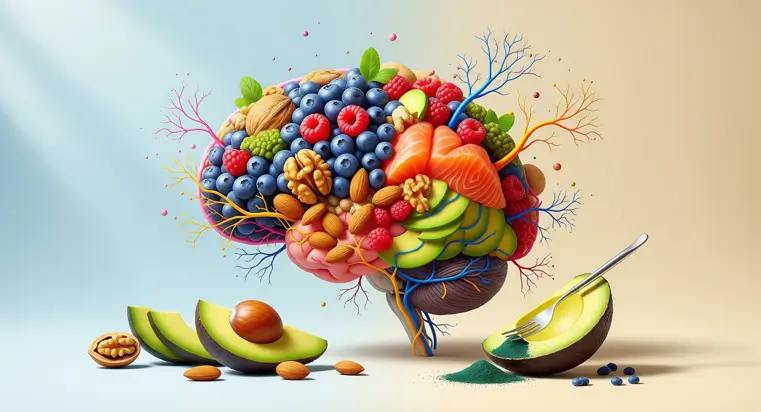
Over 7 million Americans are currently living with Alzheimer’s disease—and this number is expected to double by 2060. Nearly two-thirds of those affected are women. At age 45, the estimated lifetime risk of developing Alzheimer’s disease is 1 in 5 for women and 1 in 10 for men.
The bad news: those aren’t great odds.
The good news? Like many chronic diseases, Alzheimer’s is largely preventable.
Alzheimer’s begins 20 years or more before memory loss and other symptoms appear. This means that the daily choices you make—especially around lifestyle and nutrition—can have a powerful impact on long-term brain health. Dialing in your nutrition is a great place to start, whether you know you have an increased risk or simply want to do what you can to optimize health.
We’ve all heard that we should “shop the perimeter” of the grocery store, but an even simpler rule of thumb is to limit foods that come from bags and boxes with barcodes. As with anything in nutrition, there’s nuance—real life happens (and backyard chickens don’t always cooperate in winter!).
The lists below offer a practical way to approach disease prevention and support brain health-
Foods to eat frequently:
*Avoid any that you specifically have a sensitivity or negative response to
Foods to have in moderation:
*Avoid any that you specifically have a sensitivity or negative response to
Foods to avoid if possible:
*Some grains can be healthy, but carbohydrate-rich foods in general can be strong contributors to insulin dysfunction which can further impair cognitive function, memory and energy metabolism.
Alzheimer’s Association. (n.d.). Alzheimer’s Association. https://www.alz.org/
Bredesen, D. E. (2017). The End of Alzheimer’s: The First Program to Prevent and Reverse Cognitive Decline. Avery.