

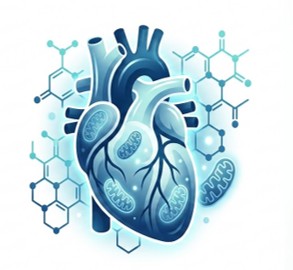
Glutathione and Heart Health
We often hear about glutathione in connection with detoxification. Glutathione is a natural antioxidant made by the body from three amino acids: glutamine, cysteine, and glycine. It helps process certain chemicals and supports the body’s defense against oxidative stress.
Glutathione also plays an important role inside the mitochondria—the structures within our cells that produce energy. This may be especially relevant to the heart because heart muscle cells require large amounts of energy and contain many mitochondria.
What are reactive oxygen species?
Whenever cells use oxygen to produce energy, they create molecules called reactive oxygen species, or ROS. A helpful way to picture ROS is as small “sparks” produced during energy generation.
The body normally neutralizes these sparks with antioxidants, including glutathione. When ROS production exceeds the body’s ability to control them, oxidative stress can occur. Over time, oxidative stress may contribute to damage involving cells, proteins, DNA, and tissues.
This balance between oxidation and protection is often called redox balance. As we age, or when cells are under metabolic or inflammatory stress, the body may become less efficient at maintaining this balance.
Mitochondria, aging, and the heart
Mitochondrial changes may contribute to cardiovascular problems over time. A proposed sequence is:
- Increased electron leakage during energy production.
- Greater oxidative stress and molecular damage.
- Less efficient energy production.
- Additional ROS generation.
- Disruption of the mitochondrial network.
- Reduced removal of damaged mitochondria, a process called mitophagy.
- Increased inflammatory signaling.
- Impaired function of heart and blood-vessel tissue.
These changes may occur before symptoms become obvious. However, mitochondrial dysfunction and oxidative stress are only part of a much larger picture that also includes blood pressure, cholesterol, diabetes, smoking, genetics, inflammation, and lifestyle factors.
Plaque in the arteries
If plaque has formed in an artery, a stable plaque is generally less likely to rupture than an unstable plaque. Many heart attacks occur when a plaque ruptures and a blood clot forms, reducing or blocking blood flow to the heart.
Inflammation and oxidative stress may contribute to plaque development and instability. Supporting overall metabolic and cardiovascular health may therefore help reduce risk. This includes managing blood pressure, cholesterol, blood sugar, body weight, sleep, physical activity, and tobacco exposure.
While glutathione is central to the body’s antioxidant system and theoretically beneficial for cardiovascular support, it is not a proven standalone for disease prevention. Heart health remains a multifactorial challenge that requires managing all standard risk factors. Interestingly, while chronological “age” is a conventional risk factor that remains fixed, supporting glutathione levels may offer a way to address the underlying mitochondrial and oxidative shifts associated with aging that we otherwise cannot change. We can perhaps influence biological age by this mechanism.
Atrial fibrillation and other arrhythmias
Insulin resistance and metabolic dysfunction are associated with a higher risk of atrial fibrillation and other rhythm problems. When cells receive more fuel than the mitochondria can efficiently process, electron leakage and ROS production may increase.
Oxidative stress can affect heart-muscle cells and the electrical pathways that coordinate the heartbeat. This may be one mechanism linking metabolic health with abnormal heart rhythms, although arrhythmias have many possible causes.
Heart failure
Mitochondrial dysfunction may also contribute to heart failure by reducing the amount of energy available to heart-muscle cells.
In heart failure with preserved ejection fraction, the heart pumps out a relatively normal percentage of blood but may be stiff and unable to fill properly. Metabolic dysfunction, inflammation, and fibrosis may all play a role.
In heart failure with reduced ejection fraction, the heart’s pumping ability is decreased. This can occur after damage such as a heart attack, when reduced blood flow limits the heart muscle’s ability to produce energy and contract effectively.
Do you need more glutathione?
Glutathione helps protect cells from oxidative stress and supports mitochondrial function. Because the heart depends heavily on mitochondrial energy production, maintaining healthy redox balance may be relevant to cardiovascular health.
While central to cellular protection, glutathione remains just one element of a highly integrated system. It is not a singular solution for preventing cardiovascular issues like heart failure or arrhythmias. A comprehensive approach to heart health must also prioritize nutrition, sleep, physical activity, stress management, and detoxification. Indicators that your redox resilience may require attention include rising inflammatory markers, such as hsCRP, on blood assessments. Furthermore, elevated levels of lipid peroxides or 8-OHdG can signal oxidative damage to lipids as well as mitochondrial and nuclear DNA. Ultimately, glutathione status can be directly measured and addressed to support optimal function.
Supporting and Supplementing Glutathione
Supporting glutathione production involves getting enough of the B vitamins and magnesium involved in the methylation pathways of the body. In addition, your body needs adequate glutamine, cysteine and glycine. Cysteine tends to be the “rate limiting” factor in glutathione production so sometimes N-Acetyl-Cysteine (NAC) is given to support glutathione production.
To support cellular levels, glutathione is frequently taken as an oral supplement. Liposomal delivery systems are typically preferred to improve absorption and have been shown to effectively increase concentrations within the body. While most individuals utilize liquid liposomal preparations or capsules, glutathione can also be administered through IV infusion or small subcutaneous injections. For oral supplementation, a common daily range is between 100 and 500 mg.
References:
Tan M, Yin Y, Ma X, Zhang J, Pan W, Tan M, Zhao Y, Yang T, Jiang T, Li H. Glutathione system enhancement for cardiac protection: pharmacological options against oxidative stress and ferroptosis. Cell Death Dis. 2023 Feb 16;14(2):131. doi: 10.1038/s41419-023-05645-y. PMID: 36792890; PMCID: PMC9932120.
Chen TH, Wang HC, Chang CJ, Lee SY. Mitochondrial Glutathione in Cellular Redox Homeostasis and Disease Manifestation. Int J Mol Sci. 2024 Jan 21;25(2):1314. doi: 10.3390/ijms25021314. PMID: 38279310; PMCID: PMC10816320.

Related posts