The Gut-Bone-Immune Connection
Bone health relies on a dynamic balance between bone-building osteoblasts and bone-resorbing osteoclasts. Gut dysbiosis and increased intestinal permeability elevate systemic inflammation via bacterial lipopolysaccharides (LPS), driving osteoclast activity and bone loss through the gut-bone-immune axis. Beyond standard pharmaceuticals, integrative strategies—such as key nutrient intake (Vitamin D3, K2, calcium, magnesium), polyphenol-rich foods, weight-bearing exercise, strain-specific probiotics, and prebiotic fibers—help mitigate inflammation and optimize bone density.
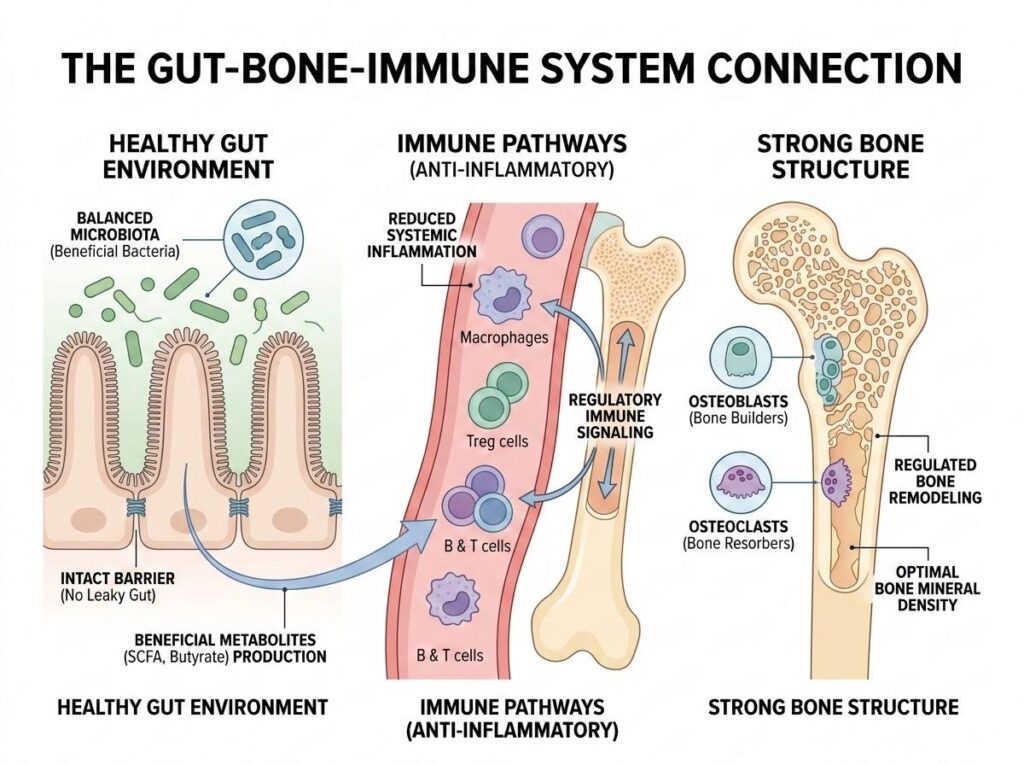
Bone is living and breathing and metabolically active and not just a structural entity in our body. Your bones are fluid and are constantly remodeling. Osteoporosis is diagnosed when the bone resorption exceeds the bone formation. The cells in the bones that resorb or “eat” bone are the osteoclasts. The cells that build or form new bone are the osteoblasts. The balance between the bone “eaters” and bone “builders” determines the density of the bone. The immune system is literally housed inside of the bones- in the bone marrow. That is where your body produces immune cells such as macrophages and B and T cells. Inflammatory signaling in the cells influences the cells of the immune system and the balance between osteoclast and osteoblast activity. Anything that increases the inflammatory signals will increase the activity of osteoclasts and thus increase bone resorption.
Gut-Bone-Immune Connection
Gut dysbiosis and increased intestinal permeability contributes to “leaky gut”. The unfriendly overgrowth of certain bacteria in the gut produce something called LPS (lipopolysaccharides) which are toxins produced by the bacteria. The LPS translocates across the gut blood barrier in the setting of “leaky gut” which then amplifies the inflammation in the bones. This chronic low grade inflammation contributes to the imbalance of the osteoclasts and osteoblasts. This is why when thinking about the health of the bones it is way more complex than just taking enough calcium.
The Integrative-Holistic Approach to Osteoporosis
Pharmaceuticals used for the treatment of osteoporosis can be helpful and this article will not go into those in depth. Some of the medications used to treat osteoporosis are: bisphosphonates, denosumab, raloxifene, HRT (Hormone Replacement Therapy), PTH (parathyroid) analogs and calcitonin. For osteoporosis where there is fracture stage compromise sometimes the benefits of the pharmaceuticals outweigh risk. Even if using pharmaceuticals, they will work better if we make sure the body has what it needs for bone formation AND if we reduce the inflammatory burden in the bones. Certainly for prevention a holistic and natural approach can be helpful.
Vitamins and Minerals that help your osteoblasts do the work are Vitamin D3, K2, Magnesium, B Vitamins, Calcium and Phosphorus. We want to have adequate amounts of these nutrients from our diet or supplementation to support our bone health. There is some evidence for additional minerals such as boron and strontium as well.
Polyphenols such as resveratrol, quercetin and luteolin as well as omega 3 fatty acids can inhibit inflammatory signals and reduce osteoclastic activity. Eating foods such as berries and olive oil rich in polyphenols can be beneficial – not just supplementation.
Stressing the bone with resistance training and weight bearing is critical for stimulating the osteoblast activity – especially as we age.
Influencing the Gut Microbiome for Bone Health
Nurturing a healthy intestinal ecosystem offers a powerful avenue to dampen the low-grade inflammatory burden driven by bacterial LPS and compromised gut barrier function. Targeted functional testing can provide valuable clarity to guide an individualized protocol. Utilizing prebiotics, probiotics, and postbiotics can further optimize outcomes. While early microbiome research focused broadly on genus and species, current clinical evidence highlights the importance of strain-specific therapy for targeted health goals. For instance, research demonstrates that Lactobacillus reuteri 6475 supports bone mineral density in women diagnosed with osteoporosis. Furthermore, prebiotic fibers play a key role in enhancing the bio-availability and absorption of essential minerals like calcium—reminding us that dietary intake is only as beneficial as what our body can actually absorb. Soluble and insoluble fibers such as galactooligosaccharides and fructooligosaccharides nourish beneficial microbes to promote enhanced calcium uptake. Incorporating foods rich in these resistant starches, like legumes and colorful vegetables, or utilizing targeted supplementation, positively influences the dynamic balance between osteoblasts and osteoclasts. Additionally, postbiotic metabolites like butyrate and other short-chain fatty acids help regulate osteoblast and osteoclast activity in postmenopausal women.
Looking beyond standard calcium supplementation to help your overall inflammatory burden is crucial for preserving skeletal integrity. This vital connection linking intestinal health to optimal bone density operates directly through our immune pathways.
References:
Liu C, Yin X, Yuan X. Gut microbiota dysbiosis and osteoporosis: pathogenesis and novel intervention strategies. Future Microbiol. 2026 May;21(7):657-668. doi: 10.1080/17460913.2026.2678122. Epub 2026 May 22. PMID: 42172659; PMCID: PMC13271280.
Filip R, Possemiers S, Heyerick A, Pinheiro I, Raszewski G, Davicco MJ, Coxam V. Twelve-month consumption of a polyphenol extract from olive (Olea europaea) in a double blind, randomized trial increases serum total osteocalcin levels and improves serum lipid profiles in postmenopausal women with osteopenia. J Nutr Health Aging. 2015 Jan;19(1):77-86. doi: 10.1007/s12603-014-0480-x. PMID: 25560820; PMCID: PMC12280459.
Wong RH, Thaung Zaw JJ, Xian CJ, Howe PR. Regular Supplementation With Resveratrol Improves Bone Mineral Density in Postmenopausal Women: A Randomized, Placebo-Controlled Trial. J Bone Miner Res. 2020 Nov;35(11):2121-2131. doi: 10.1002/jbmr.4115. Epub 2020 Jul 14. PMID: 32564438; PMCID: PMC7689937.
Nilsson AG, Sundh D, Bäckhed F, Lorentzon M. Lactobacillus reuteri reduces bone loss in older women with low bone mineral density: a randomized, placebo-controlled, double-blind, clinical trial. J Intern Med. 2018 Sep;284(3):307-317. doi: 10.1111/joim.12805. Epub 2018 Jul 22. PMID: 29926979.
Whisner CM, Castillo LF. Prebiotics, Bone and Mineral Metabolism. Calcif Tissue Int. 2018 Apr;102(4):443-479. doi: 10.1007/s00223-017-0339-3. Epub 2017 Oct 27. PMID: 29079996; PMCID: PMC5851694.

Related posts