

Fasting Without Fasting: What to Know About the Prolon 5-Day Metabolic Reset
If you’ve heard patients or friends talking about a “5-day fasting program” that doesn’t actually require you to stop eating, you’re probably thinking of a fasting mimicking diet. Here at Sparkle Health, we offer this through the Prolon program, and it’s becoming a popular option for patients interested in metabolic health, weight management, and healthy aging.
Here’s what it is, what it can (and can’t) do, and what to know before you try it.
What Is Fasting Mimicking?
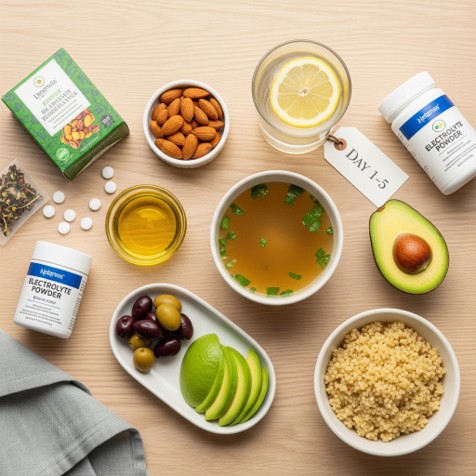
Traditional fasting means no food — just water. Fasting mimicking is different. Over five days, you eat a specially designed, low-calorie, low-protein, low-sugar plan made up of soups, nut-based bars, crackers, olives, herbal teas, and a few supplements.
The idea is to give your body just enough nutrition to function, while still tricking it into many of the same beneficial responses as a true fast — without the difficulty of going without food entirely.
What Happens in Your Body
When calories, carbs, and protein drop for a few days, several things shift:
- Blood sugar and insulin levels tend to fall
- Your body starts burning more stored fat for fuel
- Levels of a growth-related hormone called IGF-1 decrease
- Your body produces more ketones as an alternative energy source
Because of these changes, some patients notice:
- Modest short-term weight loss, including around the belly
- Better fasting blood sugar and insulin sensitivity
- Lower blood pressure, if it was previously elevated
- Improved cholesterol and triglyceride levels
- Lower markers of inflammation
- Fewer cravings and more mindful eating habits afterward
Everyone responds differently. Your results depend on your starting health, body composition, medications, sleep, and how closely you follow the plan.
What About “Autophagy”?
You may have heard this word thrown around — it refers to a natural process where your cells clean out and recycle damaged parts. Research suggests this process ramps up during fasting, possibly becoming more active around the 72-hour mark. However, this varies from person to person, and there’s no way to feel or measure it directly during the program.
It’s worth being cautious here: while the science behind autophagy is real and actively studied, fasting mimicking shouldn’t be thought of as a “detox” or a cure for anything. It’s a metabolic tool — not a miracle.
What You Might Feel During the 5 Days
Days 1–2 are usually the hardest, as your body shifts from burning sugar to burning fat. You might notice:
- Hunger
- Fatigue
- Headache
- Lightheadedness
- Trouble sleeping
- Feeling less energetic during exercise
By the middle of the program, many people feel their appetite settle down, and some notice sharper focus. Others continue to feel low energy throughout — and that’s normal too.
To be honest, by the end of the program’s 5 days, you are ready to eat regular food again but we go slow for re-entry!
Is It Safe for You?
This program isn’t right for everyone, and medical supervision matters — especially if any of these apply to you:
- You take insulin, certain diabetes medications, blood pressure medications, or diuretics
- You have diabetes, kidney disease, liver disease, or a history of electrolyte problems
- You have a history of an eating disorder, or are currently underweight
- You’re pregnant, breastfeeding, acutely ill, or recovering from surgery
- You’ve had unexplained weight loss or other symptoms that haven’t been checked out
After the 5 Days: What Actually Matters Most
Here’s the honest truth: the five days themselves aren’t the whole story. What you do afterward has the biggest impact on your long-term results.
To hold onto your progress:
- Ease back into eating gradually to avoid rebound hunger
- Prioritize protein, vegetables, legumes, and other fiber-rich foods
- Include healthy unsaturated fats
- Stay hydrated
- Keep up with resistance training, quality sleep, and stress management
Think of fasting mimicking as a short-term reset — not a standalone plan. It works best as one piece of a bigger, sustainable strategy for your health. Many people choose to do the Prolon fast quarterly or even monthly until health goals are met.
A Note on Healthy Aging
Researchers are also studying whether repeated fasting-mimicking cycles could support healthy aging — by influencing things like cellular repair, inflammation, immune balance, and metabolic resilience. Some early data even looks at effects on “biological age” markers.
That said, improvements in a lab value don’t automatically mean a longer or healthier life, and more research is needed. If longevity and healthy aging are goals for you, fasting mimicking may be a helpful addition — but it works best alongside the fundamentals: regular exercise, strength training, good protein and fiber intake, quality sleep, and staying on top of preventive care.
In patients who have been doing the fast periodically we have seen improvements in lab values and biological age.
The Bottom Line
Fasting mimicking can be a reasonable, structured option for patients interested in short-term metabolic support — when it’s used safely, with medical guidance, and as part of a broader plan rather than a quick fix.

Related posts